
COURSE DESCRIPTION
From October 9 – 15, 2022, this course will be here on WordPress to seamlessly guide you through the discovery of OEP as it relates to facilitation. The course will be beneficial to both those who are new to OEP in their teaching and those who are already users, but who are looking for an opportunity to further expand their OEP toolkit, as well as share their knowledge and experiences with others.
LEARNING OBJECTIVES
-
Experience OEP through collaborative activities, curated readings, and cohort discussions.
-
Reflect on your learnings about OEP as it relates to online facilitation, and share this information with others.


COURSE SCHEDULE
1. DOWNLOAD THE HYPOTHES.IS APP
Download and follow the instructions from the Using Hypothes.is resource and/or watch this video tutorial. Then, take a moment to explore Hypothes.is on your own. If for any reason you are not able to access Hypothes.is using the instructions provided, please email us immediately for support at openeducationalpractices@gmail.com
2. PARTICIPATE IN SYNCHRONOUS SESSION
Bring your tea, coffee, or water, and join us via Zoom for a chat about OEP! If you are not able to participate, please review the recording.
Zoom Meeting: Took place October 10, 2022
Session recording: https://www.youtube.com/watch?v=1oqZ4LmorY8
3. SOCIAL ANNOTATION ACTIVITY
In the spirit of OER and Open Pedagogy, you and your assigned group (see below) will co-create an OER by annotating an article using Hypothes.is. A space has been created on Hypothes.is (Openness & Facilitation) to house our collaborative reading and idea generation, but also to keep this work student-centered and open.
4. REFLECTION ACTIVITY
In an individual blog post, reflect on your learnings about OEP as it relates to your facilitation practice. Consider answering the questions below to guide your reflection. Then, post your reflection (max 150 words) to your blog.
What?
What is something that happened this week?
So what?
What does it mean in relation to openness and facilitation?
Now what?
What does it mean to you in your practice as a facilitator who may engage in some elements of openness?
Now, spread some love! Post a comment or question on your peers’ reflections.
5. NEXT STEPS (OPTIONAL)
Feeling inspired? Become a more open educator by taking a moment to set three development goals for yourself by answering the following questions:
-
What is one change you can make to your practice in the next 24 hours? The next week? The next month?
If you’d like to tweet your goals or extend the OEP conversation to a wider audience, please use the #RRUMALAT hashtag or simply save them to return to later.
This activity has been repurposed from Making Sense of Open Education by Maureen Glynn is licensed under CC BY 4.0 International.
REQUIRED
READINGS
1. Cronin, C. (2017). Openness and Praxis: Exploring the use of open
education practices in higher education.
International Review of Research in Open and Distributed Learning.
Athabasca University.
www.irrodl.org/index.php/irrodl/article/view/3096/4301
2. Hilton, III, J. , Wiley, D., Stein, J., & Johnson, A. (2010).
The four ‘R’s of openness and ALMS analysis:
Frameworks for open educational resources.
The Journal of Open Distance and E-Learning, 25(1), p. 37-44.
tandfonline.com/doi/full/10.1080/02680510903482132
3. Nascimbeni, F., & Burgos, D. (2016). In search for the open educator:
Proposal of a definition and a framework to increase openness adoption
among university educators. International Review of Research in
Open and Distributed Learning. 17(6).
https://www.erudit.org/fr/revues/irrodl/2016-v17-n6-irrodl04869/1064635ar/
COURSE FACILITATOR
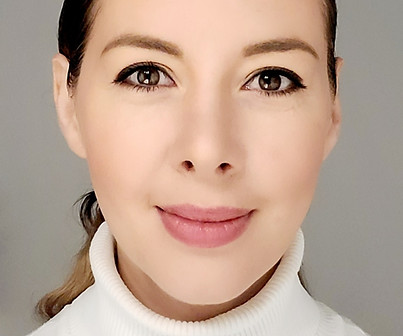
Ashley Breton
Learning Designer/Mom/Yoga Enthusiast


Hello, I’m a former ESL instructor turned learning designer who recently embarked on a journey to becoming an open educator. Since starting the MALAT program at Royal Roads University, my boundaries have changed as a facilitator. When engaged with open tools, I thought my personal life would never bleed into my professional life. Over time, I have become a little more forgiving about those boundaries, as I engage more and more in open practices.
Throughout this facilitation experience, I will share current literature with you on open educational practices for facilitation, as well as connect you with educators who have reflected deeply on what it means to teach and learn in the open. For the next week and beyond, I invite you to add your voice to the conversation!
SUPPLEMENTARY RESOURCES
This course does not assume any prior experience with OEP. On the contrary, this course is built on the idea that most participants will have little or no experience facilitating with OEP. That said, the facilitators of this course encourage anyone with limited knowledge of OEP to check out the following resources:
-
Campbell, L. (n.d.). What is Open Education Practice? The University of Edinburgh.
-
Ensor, S. (2017). Open hertz, open minds, cross-purposes. Pressbooks
-
Wiley, D. (2010). TEDxNYED [YouTube video]
Want more? Scan the QR code below or use the link here. Note: All resources will remain on this site after the course is finished, so that they may be used by anyone who would like to learn more.
.png)

STAY CONNECTED!
Your course facilitator will be available between 9:00 am and 5:00 pm (PST) throughout this facilitation week (Sunday, October 9th until Saturday, October 15th, 2022).
In addition, despite this being a primarily asynchronous course, you are welcome to schedule one-on-one or team online video or phone meetings. Please arrange a time via email or Twitter.
QUESTIONS?
If you have any questions or want to follow up with your facilitators about this course and its material,